
The digital world has shifted under our feet. AI search systems now handle over 88% of informational queries through direct answers rather than traditional search results, with AI crawler traffic growing by 305% for GPTBot alone in the past year. If your WordPress site isn't optimised for AI systems like ChatGPT, Claude, Grok, and Perplexity, you're essentially invisible to the modern web.
This isn't about jumping on the latest trend - it's about survival. AI answer engines are becoming the primary way people find information, and traditional SEO alone won't cut it anymore.
Table of Contents
- Understanding AI and WordPress
- Technical Foundation
- Content Optimization
- Schema and Structured Data
- AI Crawler Management
- Platform-Specific Optimization
- Performance Requirements
- WordPress Plugins and Tools
- Implementation Strategy
- Measurement and Monitoring
- Advanced Techniques
- Future-Proofing

Understanding AI and WordPress
How do AI systems discover and process WordPress content differently from traditional search engines?
Quick Answer: AI systems extract knowledge for synthesis and direct answers, prioritising semantic understanding over keyword density. They process WordPress's hierarchical structure as interconnected content entities rather than isolated pages.
Detailed Explanation:
Here's the thing that most people miss: AI systems aren't just crawling your site to rank pages. They're building a knowledge base. When ChatGPT or Claude visits your WordPress site, they're looking for quotable facts, clear explanations, and authoritative information they can synthesise into responses.
Traditional search engines care about keywords, backlinks, and relevance signals. AI systems care about whether your content makes sense, provides clear answers, and can be trusted. They analyse WordPress's content hierarchy - posts, pages, categories, custom post types - as a knowledge graph rather than individual ranking targets. This means your internal linking structure, content relationships, and semantic clarity matter more than ever.
The critical difference is that AI crawlers can't execute JavaScript, so everything important needs to be server-side rendered. If your content loads via Ajax or complex JavaScript, it might as well not exist to AI systems.
What percentage of searches now use AI-powered answers instead of traditional results?
Quick Answer: AI systems now handle 88.1% of informational queries through direct answers, with zero-click searches increasing from 25% to over 41% in the past year.
Detailed Explanation:
The numbers are staggering. Google's Search Generative Experience now appears in 15% of searches, causing a 54.7% decrease in organic click-through rates when displayed. Perplexity alone saw a 157,490% increase in requests between 2024-2025. That's not a typo.
This means your content strategy must shift from "getting clicked" to "getting cited." Success metrics now include attribution mentions in AI responses, citation frequency across platforms, and brand recognition in AI training data. Sites properly optimised for AI report 20% increases in organic traffic and 19% revenue growth, as early adoption provides competitive advantages before traditional SEO-only approaches become insufficient.
The writing's on the wall: voice search is projected to account for 50% of all queries by 2025. If your WordPress site isn't optimised for AI systems now, you'll be playing catch-up while your competitors establish authority.

Technical Foundation
What server requirements do AI crawlers have that differ from Google?
Quick Answer: AI crawlers require sub-2 second response times, server-side rendering, and clean semantic HTML structure. They have stricter timeout limits and cannot process client-side JavaScript.
Detailed Explanation:
AI crawlers are impatient. While Googlebot might wait around for slow-loading content, AI systems typically timeout after 2 seconds. They need everything served immediately, cleanly, and without JavaScript dependencies.
Your WordPress hosting needs to deliver content with TTFB (Time to First Byte) under 200ms, use 100% SSD storage for rapid database queries, and provide CDN distribution for global accessibility. At 365i, our WordPress hosting platform is specifically designed for these requirements, with Samsung SSD drives delivering sub-20ms database queries and autoscaling that handles AI crawler traffic spikes.
The technical reality is that many shared hosting environments simply can't meet AI crawler demands. If your site takes 3-5 seconds to load, AI systems will skip it entirely. They have billions of pages to process and no patience for sluggish servers.
How should I configure my WordPress hosting for AI optimization?
Quick Answer: Choose hosting with SSD storage, CDN integration, and autoscaling capabilities. Aim for global edge caching and HTTP/3 support.
Detailed Explanation:
Think of AI-optimised hosting like preparing for a VIP visit - everything needs to be perfect, immediately available, and professionally presented. Essential infrastructure includes 100% SSD storage, global CDN distribution, autoscaling for traffic spikes, and HTTP/3 protocol support.
Our WordPress Turbo Hosting includes high-frequency 4.2GHz processors specifically designed for AI-demanding workloads. The difference between standard hosting and AI-optimised infrastructure is roughly equivalent to the difference between a country lane and a motorway - both might get you there, but only one handles the traffic volume AI systems generate.
Server-side rendering is absolutely critical. If your content requires JavaScript to display, AI crawlers won't see it. This means ensuring your theme loads content immediately, without dependencies on front-end frameworks or lazy-loading scripts for critical information.
Content Optimization
What content structure do AI systems prefer for citations?
Quick Answer: AI systems favour content with clear hierarchical structure, FAQ sections, tables, and quotable statistics. Lead with direct answers followed by supporting details.
Detailed Explanation:
AI systems love content that's structured like a well-organised reference book. They prefer clear headings, direct answers at the beginning of sections, and information that can be easily extracted and quoted. Think of writing for AI like writing for someone who's incredibly smart but has terrible attention span.
The golden rule is: answer first, explain after. If someone asks "How fast should a WordPress site load?", start with "WordPress sites should load in under 2 seconds for optimal AI crawler access" before diving into the technical details. This approach works for both AI systems and human readers who scan content quickly.
Tables, lists, and FAQ sections perform exceptionally well because they present information in digestible chunks. AI systems can easily extract specific data points, statistics, and step-by-step processes from well-structured content. The key is making your expertise accessible, not showing off how much you know.
How long should my content be for different AI platforms?
Quick Answer: Content length varies by platform: Perplexity favours 10,000+ words, while OpenAI systems prefer quotable sections regardless of total length. Google SGE shows no specific length preference.
Detailed Explanation:
Different AI platforms have distinct preferences, which means your content strategy needs to be more nuanced than traditional SEO. Perplexity heavily favours comprehensive guides exceeding 10,000 words with exhaustive coverage - they want to see you've covered every angle of a topic.
OpenAI systems focus more on extractable sections and quotable facts. Content structure matters more than length - clear sections of 300-500 words work brilliantly if they contain authoritative, quotable information. Google SGE optimises for featured snippet eligibility, targeting 150-300 words per topic section with direct answers.
The universal approach is creating comprehensive cornerstone content (5,000+ words) broken into quotable sections. This satisfies platforms that want depth while providing easily extractable information for systems that prefer concise answers. Think of it as building a resource that works like a Swiss Army knife - multiple tools for different situations.
What types of content get cited most frequently by AI systems?
Quick Answer: Original research, comparison tables, step-by-step guides, and FAQ sections receive the highest citation rates. Primary sources outperform aggregated content.
Detailed Explanation:
AI systems are hungry for authoritative, original content they can trust and quote. Original research, surveys, and industry studies get cited because they provide unique data points that can't be found elsewhere. When you publish "WordPress Security: 2025 Statistics and Best Practices" with your own research, you become a primary source.
Comparison tables are citation gold because they present complex information in an easily digestible format. Step-by-step guides work brilliantly because AI systems love providing procedural information to users. FAQ sections are perfect for conversational AI extraction - they literally mirror how people ask questions and receive answers.
The key differentiator is authority and originality. If your content regurgitates information that's available everywhere else, AI systems will cite more authoritative sources. But if you provide unique insights, original data, or expert commentary that can't be found elsewhere, you become the go-to source for that information.
Schema and Structured Data
Which schema types are most important for AI optimization?
Quick Answer: Focus on Article/BlogPosting, FAQPage, HowTo, Organization/Person, and Product schemas. These provide the clearest structure for AI interpretation.
Detailed Explanation:
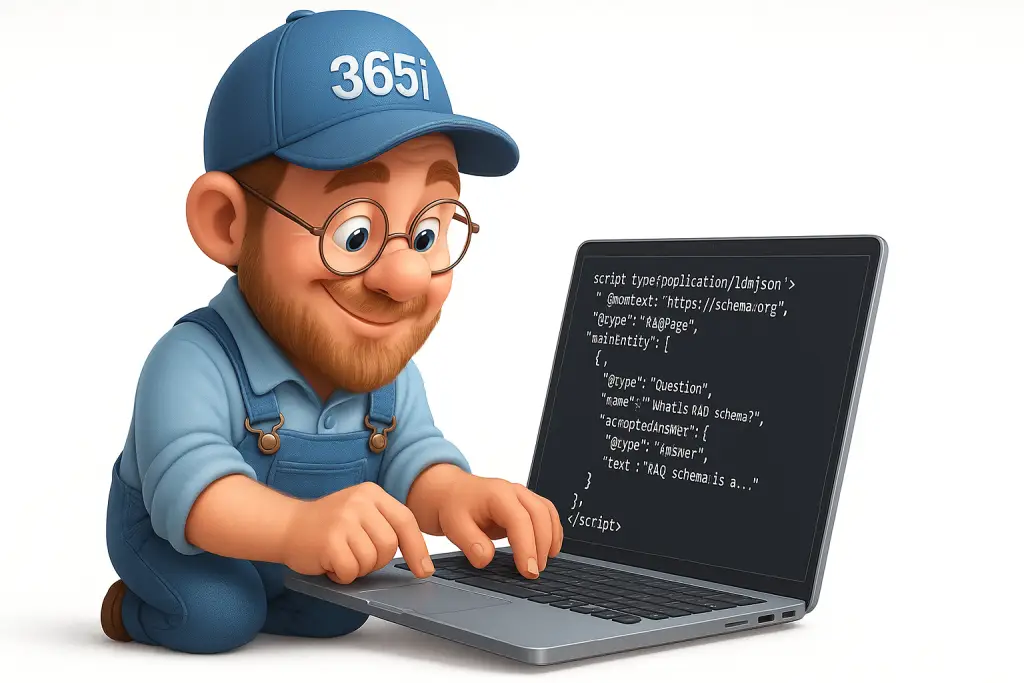
Schema markup is like providing subtitles for AI systems - it tells them exactly what they're looking at and how to interpret your content. The most crucial types for AI optimization are Article/BlogPosting (establishes content type and authorship), FAQPage (perfect for conversational AI extraction), HowTo (structured instructions AI systems love to cite), Organization/Person (authority and expertise signals), and Product/Service schemas for commercial content.
AI systems use structured data to understand content context and relationships. When you properly implement schema markup, you're essentially creating a roadmap that helps AI systems navigate and understand your content more effectively. This increases the likelihood that your content will be selected for citations and direct answers.
The beauty of schema is that it benefits both AI systems and traditional search engines. It's one of those rare optimizations that provides immediate SEO benefits while future-proofing your content for AI systems.
How do I implement FAQ schema for better AI citations?
Quick Answer: Use structured FAQ markup with clear questions and concise answers. Each FAQ item should address specific user queries in natural language.
Detailed Explanation:
FAQ schema is probably the most important structured data you can implement for AI optimization. It provides perfect content for conversational AI systems because it mirrors natural question-and-answer patterns. The key is using natural, conversational questions that people actually ask, not formal FAQ entries that sound like legal documents.
Each FAQ answer should be complete but concise - typically 50-150 words that directly address the question. Include specific data, examples, and actionable information. AI systems prefer answers that can stand alone without requiring additional context.
Most WordPress SEO plugins now include FAQ schema builders, making implementation straightforward. The critical factor is content quality rather than technical complexity. Well-written FAQ sections often get featured prominently in AI responses because they provide exactly what conversational AI systems need.

AI Crawler Management
Which AI crawlers should I allow and which should I block?
Quick Answer: Allow GPTBot, ClaudeBot, Googlebot, and Bingbot for beneficial AI systems. Consider blocking CCBot and unauthorized scrapers. Never block Googlebot or Bingbot if you want search visibility.
Detailed Explanation:
Managing AI crawlers requires balancing content access for beneficial systems while protecting against exploitative crawling. The key is understanding the difference between crawlers that provide value (citation opportunities, improved visibility) and those that simply extract content for training without attribution.
GPTBot (OpenAI), ClaudeBot (Anthropic), and ChatGPT-User should generally be allowed because they power widely-used AI systems that can provide citation benefits. Googlebot and Bingbot remain essential for traditional search visibility. However, you might consider blocking CCBot (Common Crawl) if you want to opt out of training data collection without losing citation opportunities.
The robots.txt file is your primary tool for crawler management, but remember that it's advisory rather than legally binding. Well-behaved crawlers respect these directives, while malicious scrapers often ignore them entirely.
How do I prevent my content from being used in AI training while still allowing citations?
Quick Answer: Block training-specific crawlers (Google-Extended, CCBot) while allowing retrieval crawlers (GPTBot, ClaudeBot). Use meta tags to control snippet generation.
Detailed Explanation:
This is one of the most nuanced aspects of AI optimization. You can selectively allow AI access for real-time citations while blocking training data collection by understanding the difference between training crawlers and retrieval crawlers.
Training crawlers like Google-Extended and CCBot collect content for AI model training, while retrieval crawlers like GPTBot and ClaudeBot access content for real-time citations and responses. Blocking the former while allowing the latter gives you the best of both worlds - protection from unauthorized training use while maintaining visibility in AI responses.
Meta tags provide additional control over how your content appears in AI-generated snippets. The key is finding the balance that protects your intellectual property while maintaining the visibility benefits that AI systems can provide.
Platform-Specific Optimization
How do I optimize specifically for ChatGPT and OpenAI systems?
Quick Answer: Ensure server-side rendering, fast response times under 2 seconds, and comprehensive schema markup. OpenAI systems prefer quotable sections and clear source attribution.
Detailed Explanation:
OpenAI's ecosystem uses three specialized crawlers with distinct purposes: GPTBot for training data collection, OAI-SearchBot for citation indexing, and ChatGPT-User for real-time retrieval. Each has slightly different requirements, but all demand immediate content availability and clear source attribution.
OpenAI systems particularly value quotable sections and authoritative sources. They prefer content that includes specific data, expert quotes, and clear attribution. This means ensuring your author information is prominently displayed, your organization details are clear, and your expertise signals are obvious.
The technical requirements focus on immediate content availability - no JavaScript dependencies for critical information, fast server response times, and clean HTML structure. OpenAI systems are more likely to cite content that loads quickly and presents information clearly.
What makes content more likely to be cited by Perplexity?
Quick Answer: Perplexity favours extremely long content (10,000+ words), strong brand recognition, and discussion-based formats. Reddit content accounts for 6.6% of Perplexity citations.
Detailed Explanation:
Perplexity operates differently from other AI platforms, showing a strong preference for comprehensive coverage and community-style content. They heavily favour in-depth guides that exceed 10,000 words and demonstrate exhaustive topic coverage.
Brand recognition plays a significant role in Perplexity citations. Top 25% brands receive 169 mentions versus 10x fewer for less recognized sites. This means building brand authority across multiple platforms and contexts becomes crucial for Perplexity visibility.
The platform also shows preference for discussion-based content formats, Q&A style articles, and content that presents multiple perspectives on topics. Real-time updates and fresh content get priority in recent queries, making regular content updates particularly valuable for Perplexity optimization.
How do I optimize for Google's AI features (SGE)?
Quick Answer: Maintain traditional SEO excellence while adding AI layers. Focus on featured snippet optimization, Core Web Vitals, and E-E-A-T signals.
Detailed Explanation:
Google's Search Generative Experience builds on traditional ranking factors while adding AI-specific requirements. This means you can't abandon traditional SEO - you need to excel at both traditional optimization and AI-specific enhancements.
Featured snippet optimization becomes crucial because SGE often sources information from existing featured snippets. Core Web Vitals matter more than ever because AI-generated responses need to load quickly and provide excellent user experience. E-E-A-T (Experience, Expertise, Authoritativeness, Trustworthiness) signals receive amplified importance in AI-powered results.
The key is viewing SGE optimization as an enhancement to, rather than replacement for, traditional SEO. Strong technical foundations, excellent content, and clear expertise signals benefit both traditional search results and AI-generated responses.
Performance Requirements
What are the specific performance requirements for AI crawlers?
Quick Answer: Target sub-2 second load times, TTFB under 200ms, and mobile PageSpeed scores above 90. AI crawlers have stricter timeout limits than traditional search engines.
Detailed Explanation:
AI systems operate under much tighter time constraints than traditional search crawlers. While Googlebot might be patient with slower sites, AI crawlers typically abandon sites that don't respond within 2 seconds. This isn't just about user experience - it's about accessibility to AI systems.
Critical performance metrics include load times under 2 seconds (ideally under 1 second), TTFB under 200ms for optimal crawl frequency, mobile PageSpeed scores above 90, and Core Web Vitals achievement at the 75th percentile. These aren't aspirational targets - they're minimum requirements for effective AI crawler access.
Our Free Global CDN provides the edge caching and optimization needed to achieve these performance targets consistently. The difference between meeting and missing these benchmarks often determines whether AI systems include your content in their knowledge base or skip it entirely. For specific guidance on improving one of the most important Core Web Vitals metrics, see our detailed guide on how to Fix WordPress INP Issues in PageSpeed Insights.
How important is mobile optimization for AI systems?
Quick Answer: Critical. AI systems prioritize mobile-first indexing and user experience signals. Mobile performance directly impacts AI crawler behavior and citation likelihood.
Detailed Explanation:
Mobile optimization affects AI systems through multiple pathways, starting with mobile-first indexing policies that prioritize mobile user experience. AI systems evaluate content through the lens of mobile accessibility, which means responsive design, touch-friendly interfaces, fast mobile loading, readable content, and mobile-optimized schema markup are all essential.
The technical reality is that many AI queries originate from mobile devices, and AI systems need to ensure their responses work well for mobile users. This means content that performs poorly on mobile devices is less likely to be cited, regardless of desktop performance.
Mobile-first design principles align perfectly with AI optimization requirements: clear information hierarchy, scannable content blocks, and immediate content availability all benefit both mobile users and AI systems.
WordPress Plugins and Tools
Which WordPress plugins are essential for AI optimization?
Quick Answer: Rank Math Pro for comprehensive AI tools, Schema Pro for structured data, WP Rocket for performance, and AI Engine for LLM integration. Choose plugins that work together rather than competing solutions.
Detailed Explanation:
The WordPress ecosystem has evolved rapidly to support AI optimization, with several standout plugins leading the charge. Rank Math Pro offers over 40 AI tools, schema automation, and OpenAI integration for £6.99/month. AIOSEO provides AI meta generation and comprehensive schema support for £39/year.
For structured data, Schema Pro (£69/year) offers 20+ schema types with automation rules, while the free "Schema & Structured Data for WP" plugin provides 35+ schema types with conditional logic. Performance plugins like WP Rocket (£59/year) focus on Core Web Vitals optimization and AI crawler compatibility.
The key is choosing plugins that complement rather than compete with each other. A well-integrated stack typically includes one comprehensive SEO plugin, one performance optimization plugin, and one specialized schema plugin. Avoid installing multiple plugins that duplicate functionality, as this can create conflicts and slow down your site.
Are there any WordPress themes specifically optimized for AI?
Quick Answer: Yes. GeneratePress, Astra, and Neve provide lightweight, semantic HTML ideal for AI parsing. Emerging themes like Kubio AI offer AI-assisted building with optimization built-in.
Detailed Explanation:
Theme choice significantly impacts AI crawlability and content interpretation. AI-optimized themes share common characteristics: semantic HTML5 structure, clean code with minimal DOM depth, fast loading performance, built-in schema support, and mobile-first responsive design.
GeneratePress excels with modular, lightweight construction and extensive schema support. Astra focuses on performance with excellent AI plugin compatibility. Neve delivers fast loading with semantic structure, while Kubio AI offers AI-assisted building with semantic optimization built-in.
The critical factor isn't necessarily choosing an "AI-optimized" theme, but ensuring your chosen theme uses semantic HTML5 elements properly, loads quickly, and doesn't rely heavily on JavaScript for content display. Many popular themes can be optimized for AI with proper configuration and optimization plugins.
Implementation Strategy
What's the best step-by-step approach to implement AI optimization?
Quick Answer: Start with foundation elements (0-30 days), build optimization layers (30-90 days), implement comprehensive strategies (3-6 months), then scale and evolve (6-12 months).
Detailed Explanation:
Successful AI search optimization follows a structured approach that builds competency progressively. The first 30 days focus on technical foundations: installing comprehensive SEO plugins, configuring robots.txt for AI crawlers, implementing basic schema markup, and establishing performance monitoring to support your efforts to get your website featured in AI search results.
Months 1-3 concentrate on content enhancement: rewriting key pages with AI-friendly structure, adding comprehensive FAQ sections, creating topic cluster content, and implementing strategic internal linking. This period also includes advanced technical configuration like platform-specific optimizations and crawler monitoring - essential SEO strategies for AI that help you appear in ChatGPT responses and other AI-powered search results.
The 3-6 month phase involves comprehensive strategy implementation: advanced schema types, voice search optimization, multimodal content preparation, and systematic content auditing. The final phase (6-12 months) focuses on scaling successful strategies, monitoring emerging AI platforms, and maintaining competitive advantages through continuous optimization that keeps your content ranking in AI search results.
How do I prioritize which pages to optimize first?
Quick Answer: Start with high-traffic pages, cornerstone content, and commercial pages. Focus on content that already ranks well or has strong engagement metrics.
Detailed Explanation:
Strategic prioritization maximizes ROI from AI optimization efforts by focusing resources where they'll have the greatest impact. High-traffic pages combined with high commercial value should receive immediate attention - these are your money pages that already demonstrate value.
Well-ranking content that could benefit from AI citations represents significant opportunity. These pages already have search engine trust and user engagement, making them prime candidates for AI optimization that can amplify existing success.
Strategic content like voice search target pages and foundation pages (about, contact, service descriptions) provide long-term value. While they might not generate immediate traffic increases, they establish authority signals that benefit your entire site's AI optimization efforts.
Measurement and Monitoring
How do I track if my AI optimization is working?
Quick Answer: Monitor AI crawler visits through server logs, track citations in AI responses, measure brand mentions, and monitor performance metrics. Set up Google Search Console for AI Overviews visibility.
Detailed Explanation:
AI optimization requires new measurement approaches beyond traditional SEO metrics. Success indicators include increasing AI crawler visits, citation appearances in AI responses, brand mentions across platforms, and improved performance metrics. Google Search Console now provides AI Overviews visibility data, offering insights into AI-powered search appearances.
Monthly manual testing across AI platforms provides direct feedback about citation frequency and response quality. This involves querying relevant topics across ChatGPT, Claude, Perplexity, and Google SGE to identify when and how your content appears in responses.
The key is establishing baseline measurements before optimization begins, then tracking improvements over 3-6 month periods. AI optimization results often take longer to manifest than traditional SEO changes, requiring patience and consistent monitoring to identify successful strategies.
What tools help monitor AI citations and mentions?
Quick Answer: Use Google Search Console for AI Overviews, BrandMentions for citation tracking, and custom monitoring scripts for platform-specific mentions. Manual testing across AI platforms provides direct feedback.
Detailed Explanation:
Comprehensive monitoring requires both automated tools and manual verification. Google Search Console provides official data about AI Overviews appearances, while services like BrandMentions and Mention.com track citations across platforms. Custom WordPress monitoring can track AI crawler activity and performance metrics specific to your site.
Manual testing remains crucial because AI responses vary based on query phrasing, user context, and platform algorithms. Regular testing with relevant industry queries helps identify citation patterns and optimization opportunities that automated tools might miss.
The monitoring approach should balance comprehensive data collection with actionable insights. Focus on trends rather than individual data points, and use monitoring results to refine optimization strategies rather than just tracking vanity metrics.
Advanced Techniques
How do I implement voice search optimization for AI systems?
Quick Answer: Target long-tail, conversational keywords with natural language patterns. Use FAQ sections, implement speakable schema markup, and optimize for local search queries.
Detailed Explanation:
Voice search optimization becomes critical as 50% of searches are projected to be voice-based by 2025. This requires targeting conversational keywords ("How do I optimize WordPress for speed?" rather than "WordPress optimization"), local intent queries, and direct answers that typically average 29 words.
FAQ sections work brilliantly for voice search because they mirror natural question-and-answer patterns. Speakable schema markup tells AI systems which content sections are suitable for voice responses. Local optimization becomes crucial because many voice searches include location intent.
The content strategy should focus on natural language patterns, complete responses that can stand alone, and clear, quotable conclusions that work well for voice delivery. This aligns perfectly with general AI optimization principles while addressing voice-specific requirements.
What are the latest developments in AI search I should prepare for?
Quick Answer: Prepare for native WordPress AI integration by 2026-2027, multimodal search including images and video, and increased emphasis on real-time content updates. Focus on semantic relationships and entity recognition.
Detailed Explanation:
The AI landscape continues evolving rapidly with several key developments on the horizon. Native WordPress AI integration is expected by 2026-2027, multimodal search will process images, videos, and audio content, and real-time processing will place increased emphasis on fresh content and immediate updates.
Semantic understanding through entity relationships and knowledge graphs will become more sophisticated, while personalized results will incorporate user context and preferences more heavily. This means content strategies should focus on building comprehensive topic authority rather than targeting individual keywords.
The key preparation strategy involves building on semantic foundations, developing comprehensive content relationships, and maintaining flexibility to adapt to emerging platforms and requirements. Early adopters who establish strong AI optimization foundations now will have significant advantages as these developments mature.
Future-Proofing
How do I ensure my WordPress site stays optimized as AI technology evolves?
Quick Answer: Focus on semantic HTML, maintain clean content architecture, implement comprehensive schema markup, and monitor emerging AI platforms. Build flexibility into your optimization strategy.
Detailed Explanation:
Future-proofing requires building on solid foundations while maintaining adaptability for emerging technologies. Semantic HTML5 provides proper content structure regardless of AI changes, clean information architecture ensures logical content relationships, and comprehensive schema markup creates machine-readable content descriptions that work across platforms.
Performance excellence and content quality remain constant requirements regardless of technological changes. Fast loading across all platforms, authoritative original content, and regular updates provide value to both current and future AI systems.
The approach should balance proven optimization techniques with experimental preparation for emerging technologies. Focus on techniques that provide immediate benefits while building foundations that support future developments.
What should I do to prepare for the next generation of AI search?
Quick Answer: Invest in content depth and authority, implement comprehensive entity linking, prepare for multimodal search, and build strong brand recognition across platforms.
Detailed Explanation:
Next-generation AI will emphasize understanding, authority, and multimodal content processing. This means building recognized expertise in your field, creating comprehensive entity relationships within your content, and preparing images, videos, and audio content for AI processing.
Brand building across multiple platforms and contexts becomes crucial for future AI visibility. Real-time relevance through rapid content updates and comprehensive topic coverage will differentiate successful sites from those that fall behind.
The preparation strategy should focus on content authority, technical excellence, and brand recognition rather than attempting to game specific AI systems. Strong foundations that demonstrate genuine expertise and provide real value will perform well regardless of how AI technology evolves.

Conclusion
WordPress optimization for AI systems represents the most significant evolution in web publishing since mobile responsiveness became essential. The sites that adapt now will establish competitive advantages that become increasingly difficult for others to match as AI systems become the primary gateway to web content.
Success requires moving beyond traditional SEO thinking to embrace how AI systems discover, understand, and utilize web content. The strategies outlined in this guide provide a comprehensive roadmap for thriving in an AI-dominated search landscape, from technical configurations and content optimization to performance requirements and platform-specific approaches.
The WordPress ecosystem at 365i is specifically designed to support these AI optimization requirements, from our high-performance hosting to our global CDN infrastructure that ensures your content loads fast enough for AI systems to crawl effectively.
Start with the foundation elements outlined in the Implementation Strategy section, then progressively build toward comprehensive AI optimization. The transformation won't happen overnight, but the sites that begin this journey now will be positioned to dominate their niches in an AI-driven future.
Ready to optimize your WordPress site for AI? Get started with 365i's WordPress hosting and transform how AI systems discover and cite your content.
What is AI search optimization for WordPress?
How do AI systems process content on a WordPress site differently?
What are the essential server requirements for AI crawlers on WordPress?
How to structure WordPress hosting for AI search optimization?
What content structure do AI systems prefer for citations?
Which schema markups are crucial for AI search optimization in WordPress?
How to implement FAQ schema for AI citations on WordPress?
Which AI crawlers to allow and block for WordPress optimization?
Learn more about our WordPress Hosting.